
What Is an eSIM?
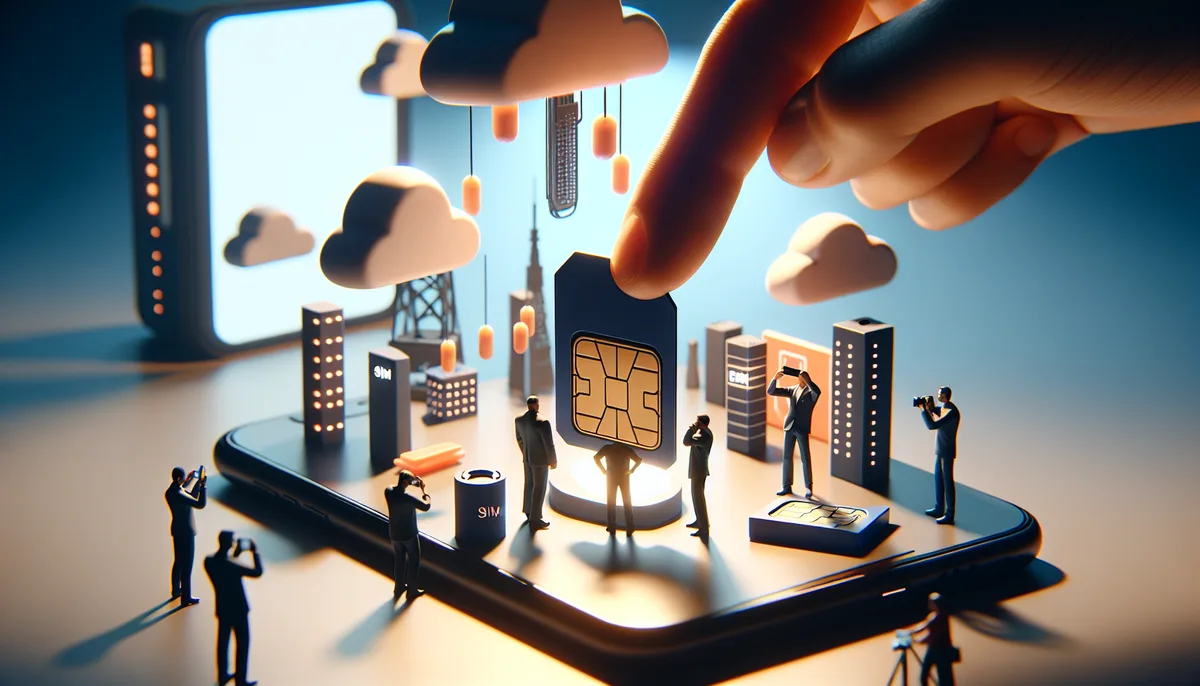
An eSIM (embedded SIM) is a small chip permanently built into your phone, tablet, or smartwatch that does the same job as a traditional plastic SIM card — but without the physical card. Instead of popping a tiny tray out of your device and swapping a fingernail-sized piece of plastic, you download a carrier profile digitally, usually by scanning a QR code or tapping a link.
The "e" stands for "embedded." Unlike a removable SIM card that you can lose, damage, or forget in your other phone, an eSIM is soldered directly onto your device's motherboard during manufacturing. It is a piece of hardware that is always there. What changes is the software loaded onto it — the carrier profile that tells your phone which mobile network to connect to, what your phone number is, and what data plan you are using.
This distinction matters because it means you can switch carriers, add travel data plans, or manage multiple phone numbers without ever touching a physical card. The entire process happens over the air through a secure remote provisioning system standardized by the GSMA, the global trade body for mobile operators.
How Does an eSIM Work?
At a technical level, an eSIM uses a standardized chip called an eUICC (embedded Universal Integrated Circuit Card). This chip can securely store multiple carrier profiles simultaneously — think of it like a digital wallet that can hold several "virtual SIM cards" at once, even though only one or two can be active at any given time.
Here is how the activation process typically works:
- You purchase a data plan from a provider like tukango, choosing the country and data amount you need.
- You receive a QR code via email or in your account dashboard. This QR code contains the information your device needs to download the carrier profile.
- You scan the QR code using your phone's camera through the eSIM settings menu. Your device contacts the carrier's provisioning server over WiFi or an existing cellular connection.
- The carrier profile downloads onto your eUICC chip. This typically takes 30 seconds to 2 minutes.
- Your device connects to the local mobile network in your destination country. You now have cellular data.
The entire process is governed by GSMA's Remote SIM Provisioning (RSP) specification, which ensures that the profile download is encrypted end-to-end. No one can intercept or tamper with the carrier credentials during transfer. Once installed, the profile sits securely on the eUICC chip just like data on a traditional SIM card would.
eSIM vs Physical SIM: Key Differences
Understanding the practical differences between eSIM and physical SIM helps clarify why the industry is moving toward embedded technology.
Form factor: A physical SIM is a removable card (nano-SIM in modern phones) that slots into a tray on the side of your device. An eSIM is a chip built into the device — there is nothing to insert or remove.
Activation method: Physical SIMs are pre-programmed at the factory and tied to a single carrier. To switch, you need a new card. eSIMs are reprogrammable over the air — you download new profiles as needed.
Storage capacity: A physical SIM holds one carrier profile. An eSIM chip can store eight or more profiles simultaneously (the exact number depends on your device), though most phones allow only one or two to be active at a time.
Durability: Physical SIM cards can be lost, scratched, or damaged by moisture. The eSIM chip is protected inside your device's sealed housing, shielded from physical damage.
Availability: Physical SIMs require either visiting a store or waiting for postal delivery. eSIM plans can be purchased and activated from anywhere with an internet connection, at any time.
Dual SIM capability: Many modern phones use a "physical SIM + eSIM" dual SIM configuration, letting you keep your home number on the physical SIM while using an eSIM for travel data. Some newer devices, like the iPhone 16 series (US models), are eSIM-only with support for two active eSIM profiles.
Benefits of eSIM for Travelers
International travel is where eSIM technology delivers its most compelling advantages. Here is why seasoned travelers increasingly prefer eSIM over traditional options:
Instant activation — no waiting, no hunting
When you land in a new country, the last thing you want is to search for a mobile shop in an unfamiliar airport, wait in line, deal with a language barrier, and hope they have a compatible SIM card in stock. With an eSIM, you can purchase and install your data plan before you even board your flight. The moment your plane touches down and you turn off airplane mode, you are connected.
No physical swapping
Removing a SIM tray requires a pin tool (which you inevitably lose), steady hands, and a flat surface — not ideal on a plane or in a taxi. Worse, you need to store your home SIM somewhere safe for the duration of your trip. eSIM eliminates this entirely. Your home SIM stays in the phone, and your travel eSIM runs alongside it.
Keep your home number active
With dual SIM functionality, your home phone number remains reachable for calls and texts (via your physical SIM or primary eSIM) while your travel eSIM handles data. This means you can still receive verification codes from your bank, stay reachable for emergencies, and use data-heavy apps on cheap local rates — all simultaneously.
Multiple countries, one device
Multi-country travelers benefit enormously from eSIM. Instead of buying a new SIM card in every country, you can install separate eSIM profiles for each destination — or use a regional plan that covers multiple countries. You can store profiles for countries you visit frequently and reactivate them on future trips without repurchasing.
Cost savings over roaming
International roaming charges from your home carrier can be staggering — often $10-15 per gigabyte or more. Prepaid eSIM travel plans typically cost a fraction of that. A 5 GB plan for most countries through tukango costs roughly what you would pay for 500 MB of roaming data from a major carrier.
Better for the environment
This one is easy to overlook, but the scale matters. The mobile industry produces billions of plastic SIM cards annually, each requiring raw materials, manufacturing energy, packaging, and shipping. eSIM eliminates all of that physical waste.
Which Devices Support eSIM?
eSIM support has expanded rapidly. As of 2026, the vast majority of flagship and mid-range smartphones support eSIM. Here is a comprehensive breakdown:
Apple iPhone
- iPhone XS, XS Max, XR (2018) and all newer models
- iPhone 14 (US models) and iPhone 15/16 series (US models) are eSIM-only — no physical SIM tray at all
- All iPhone models support at least one eSIM profile; iPhone 13 and later support dual eSIM (two active eSIM profiles simultaneously)
Samsung Galaxy
- Galaxy S20 series and newer (S21, S22, S23, S24, S25)
- Galaxy Z Fold and Z Flip series (all generations)
- Galaxy Note 20 and newer
- Galaxy A54, A55 and select mid-range models
Google Pixel
- Pixel 3 and all newer models (Pixel 4, 5, 6, 7, 8, 9)
- Pixel phones have excellent eSIM support with a clean, straightforward setup process
Other Android devices
- OnePlus (12, 13, Open)
- Xiaomi (13, 14 series, select models)
- Motorola (Razr series, Edge series)
- Oppo (Find X series, select models)
- Nothing Phone (1, 2, 2a)
Tablets and wearables
- iPad Pro (3rd gen and later), iPad Air (3rd gen and later), iPad (7th gen and later), iPad mini (5th gen and later)
- Apple Watch (Series 3 and later, cellular models)
- Samsung Galaxy Watch (4 and later, LTE models)
- Google Pixel Watch (all generations)
Not sure if your specific device supports eSIM? Use the tukango compatibility checker to verify your exact model before purchasing.
One important note: even if your device supports eSIM, it must be carrier-unlocked to use a third-party eSIM. If you bought your phone on an installment plan from a carrier, it may still be locked. Contact your carrier to confirm or check our device compatibility page for instructions on how to verify.
How to Get an eSIM for Travel
Getting a travel eSIM is straightforward. With tukango, the process takes about three steps and two minutes:
- Choose your destination — Browse 190+ countries and select the data plan that fits your trip. Plans vary by data amount (1 GB to unlimited) and validity period (7 to 30 days).
- Complete your purchase — Check out securely. You will receive your eSIM QR code instantly via email and in your dashboard.
- Scan and connect — Open your phone's settings, scan the QR code, and your eSIM installs automatically. You can do this before your trip so you are ready the moment you land.
For a more detailed walkthrough, visit the How It Works page.
Every purchase through tukango comes with a money-back guarantee, so you can buy with confidence knowing your purchase is protected.
Is eSIM Safe and Secure?
Security is a common concern, especially since eSIM provisioning happens "over the air." The short answer: eSIM is at least as secure as a physical SIM, and arguably more secure in several ways.
GSMA security standards
The eSIM ecosystem is governed by GSMA's Security Accreditation Scheme (SAS). Every component in the chain — from the eUICC chip manufacturer to the provisioning servers — must meet rigorous security certifications. The profile download process uses mutual authentication and end-to-end encryption, meaning both the device and the server verify each other's identity before any data is exchanged.
tukango's infrastructure is powered by GSMA-certified infrastructure, ensuring every eSIM profile you download meets these international security standards.
No physical theft risk
A physical SIM can be removed from a stolen phone and placed in another device to intercept calls, messages, or two-factor authentication codes. An eSIM is embedded in the device and cannot be physically extracted. If your phone is stolen, the eSIM profiles are protected by your device's lock screen and biometric security.
Remote management
If you lose your device, you can remotely wipe it (using Find My iPhone or similar services), which also erases all eSIM profiles. With a physical SIM, the thief can simply remove the card before you initiate a remote wipe.
SIM swap protection
SIM swap fraud — where a criminal convinces your carrier to transfer your number to their SIM — is a well-documented attack vector. While eSIM does not eliminate SIM swap fraud entirely (it is a social engineering attack on the carrier, not a hardware vulnerability), the embedded nature of eSIM makes certain attack vectors harder to execute.
The Future of eSIM
eSIM adoption is accelerating. The GSMA estimates that eSIM connections surpassed 2 billion globally in 2025, and that number is projected to more than double by 2028. Several trends are shaping the future:
eSIM-only devices are becoming the norm
Apple led the charge with eSIM-only iPhones in the US market starting with the iPhone 14 in 2022. By 2026, multiple Android manufacturers have followed suit with eSIM-only flagship models in select markets. The physical SIM tray is gradually disappearing from premium devices.
iSIM: the next evolution
iSIM (integrated SIM) takes the concept further by building the SIM functionality directly into the device's main processor (SoC — System on a Chip). Instead of a separate eUICC chip, the SIM logic runs in a secure enclave within the phone's primary chipset. This saves space, reduces cost, and could eventually bring cellular connectivity to tiny IoT devices like sensors and trackers that cannot accommodate even an eSIM chip.
Consumer eSIM for IoT and wearables
Beyond phones, eSIM is enabling cellular connectivity in smartwatches, fitness trackers, laptops, and even cars. As devices get smaller and more numerous, the ability to provision connectivity without a physical card slot becomes essential.
Regulatory push
Several countries and regions are introducing regulations that require carriers to support eSIM activation, preventing carriers from using eSIM lockout as a competitive barrier. This regulatory push is making it easier for consumers to switch carriers and use third-party eSIM providers for travel.
Growing travel eSIM market
The travel eSIM segment specifically is one of the fastest-growing areas, driven by increasing international travel volumes and growing consumer awareness. More travelers discover each year that they do not need to pay outrageous roaming fees or deal with the hassle of local SIM cards — and once they try eSIM, they rarely go back.
Frequently Asked Questions
Can I use eSIM and a physical SIM at the same time?
Yes. Most modern smartphones support dual SIM functionality, typically using one physical nano-SIM and one eSIM simultaneously. This is ideal for travelers: keep your home number active on the physical SIM for calls and texts, while using an eSIM for affordable local data. Some newer models like the iPhone 15 and 16 (US) support dual eSIM without any physical SIM at all, meaning you can have two eSIM profiles active at once.
Do I need an internet connection to install an eSIM?
Yes, you need either WiFi or an existing cellular data connection to download the eSIM profile. This is because the carrier profile needs to be fetched from the provisioning server. The good news is that you can install your travel eSIM while still at home on your own WiFi — there is no need to wait until you arrive at your destination. In fact, installing before you travel is the recommended approach so everything is ready when you land.
Will installing an eSIM erase my data or affect my phone?
No. Installing an eSIM is simply adding a new cellular plan to your device. It does not erase photos, apps, messages, or any other data. It does not affect your existing physical SIM or its phone number. Think of it like adding a new WiFi network to your phone — it is just another connection option, and your device handles the rest.
How many eSIM profiles can I store on my phone?
This depends on your device. Most modern iPhones (iPhone XS and later) can store at least eight eSIM profiles, though only one or two can be active at a time. Samsung and Google Pixel devices vary, but generally support five or more stored profiles. This is particularly useful for frequent travelers — you can install eSIM profiles for countries you visit regularly and simply activate the relevant one before each trip, without needing to repurchase or re-scan.
---
Ready to try eSIM for your next trip? Browse 190+ destinations on tukango to find the right data plan, or check if your device is compatible using the compatibility checker.
Gatavs palikt savienotam?
Pārlūkojiet eSIM plānus 190+ valstīm. Instant piegāde, nav rominga maksas.
Izpētīt galamērķus