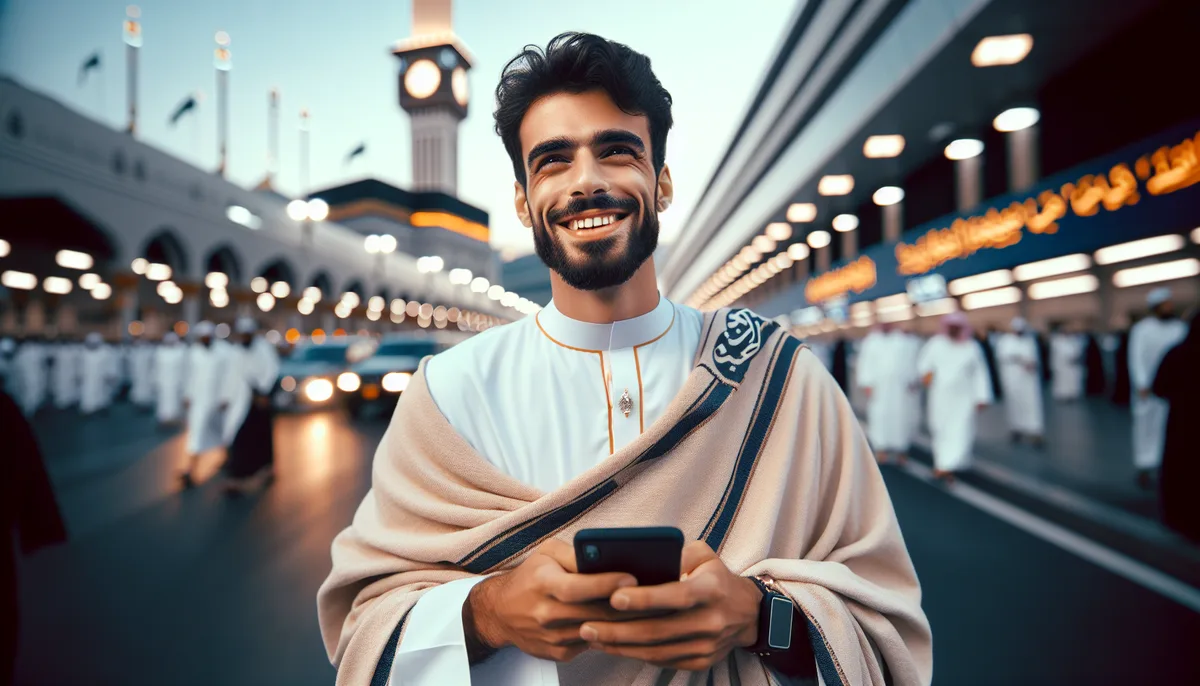

Every year, millions of Muslims travel to Saudi Arabia for Hajj and Umrah, two of the most important pilgrimages in Islam. In 2026, staying connected during these sacred journeys is more practical than ever, and having reliable mobile data can genuinely enhance the experience -- from navigating the sprawling grounds of the Masjid al-Haram to keeping your family updated with video calls back home.
This guide covers everything you need to know about getting an eSIM for Saudi Arabia, with specific advice for Hajj and Umrah travelers. We will look at network coverage in Mecca, Medina, and across the kingdom, discuss data needs for pilgrims, and explain why setting up your connectivity before departure can save you significant time and stress.
Why Connectivity Matters for Hajj and Umrah
It might seem like a spiritual journey should be disconnection-friendly, and in many ways it is. But practical reality shows that mobile connectivity has become an essential tool for pilgrims, not a distraction from the experience.
Here is why having reliable data in Saudi Arabia matters:
- Navigation in massive crowds: During Hajj, millions of pilgrims move between ritual sites including Mina, Arafat, and Muzdalifah. Mobile maps and real-time navigation can prevent you from getting lost in unfamiliar areas with limited signage.
- Translation and communication: If you do not speak Arabic, translation apps become indispensable for reading signs, menus, and communicating with local vendors or officials.
- Staying connected with your group: Hajj groups can number in the hundreds. WhatsApp and other messaging apps are how most groups coordinate meeting points, departure times, and prayer schedules.
- Video calls to family: Many pilgrims want to share moments with family back home, whether it is a video call during Tawaf or photos from the Prophet's Mosque in Medina.
- Emergency communication: In crowded environments, the ability to call emergency services, contact your embassy, or reach your tour operator quickly is a genuine safety consideration.
- Official Hajj and Umrah apps: Saudi authorities provide official digital platforms including the Nusuk app for Umrah permits and scheduling. These require an internet connection to function.
Network Coverage in Saudi Arabia
As far as your tukango eSIM is concerned, Saudi Arabia is one national network: the profile is issued on the country's largest mobile operator and stays there for the whole trip. That removes a decision rather than limiting you — nothing to compare at the arrivals hall, no swapping cards as you move between cities. 4G is the baseline anywhere pilgrims actually go: the cities, the road up from Jeddah, the run north to Madinah. Where your phone supports it, the large urban areas add 5G, which matters most when you are sending photos and video from the hotel rather than standing in a crowd.
Which Network Will Your eSIM Use?
One network, the largest in the country, for the entire journey. You will not need to choose an operator in your phone's settings. What moves through the year is capacity, not coverage: during Hajj and Umrah seasons the operator reinforces the holy sites, because a few square kilometres suddenly hold millions of connected phones. That reinforcement is why messaging and maps normally stay usable in the densest hours, while video calls are the first thing to feel the strain. Plan around it — type and share your location in the crowd, keep the video call for the hotel.
Mina, Arafat and Muzdalifah
The ritual sites are the hardest test any network faces, in any country. Expect texts, voice notes and live location to keep moving; expect a large upload to crawl while everyone around you is doing the same thing at the same minute. Two habits help more than any setting on your phone: download maps and permit screens before you leave your room, and agree on a meeting point with your group in advance instead of counting on a call at the moment you get separated.
Your Own Number Stays Yours
An eSIM is a second line, not a replacement. Your home SIM stays registered and reachable, so bank verification codes, the airline's messages and calls from relatives all land on the number they already know. The tukango line carries data only. Keep both lines switched on, set the eSIM as the data line, and leave data roaming off on your home number so your own carrier cannot bill you by accident while you travel.
Before You Fly, and When the Clock Starts
Install the eSIM at home, days or weeks ahead: the QR arrives with your order confirmation, and installing it starts nothing. The counter does not begin at purchase and it does not begin at installation — it begins the first time the line registers on a network after you land. If the trip falls through and the eSIM was never installed, you can ask for a refund at any time — there's no deadline. If you did install it but never connected, the refund is no longer automatic — support still reviews the request individually, so ask rather than assume. If data runs low mid-journey, fixed plans take a top-up from your tukango account without installing anything new, and every plan allows tethering, so the tablet in your bag or a relative's phone can work off the same line. Support over WhatsApp and email runs the length of the trip.
Connectivity in the Holy Cities
Mecca (Makkah)
Mecca has excellent mobile coverage, including inside and around the Masjid al-Haram (the Grand Mosque). However, there are important nuances for pilgrims:
Inside the Haram: All three operators maintain coverage within the Grand Mosque complex. Signal strength is generally good on the upper floors and open-air areas. In the basement levels and during extremely crowded periods (especially the nights before Hajj), you may experience slower speeds due to network congestion from the sheer number of connected devices.
During Tawaf: The area immediately around the Kaaba can experience significant congestion, particularly during peak prayer times and the Hajj days. Basic messaging and voice calls usually work fine, but video calls and heavy data usage may be intermittent during the busiest hours.
Surrounding areas: Hotels and accommodations in the Ajyad, Aziziyah, and other districts around the Haram have strong and consistent coverage. You should have no trouble with video calls, navigation, or streaming from your accommodation.
Medina (Al-Madinah)
The Prophet's Mosque (Al-Masjid an-Nabawi) and surrounding areas in Medina enjoy excellent coverage. The crowds in Medina, while still substantial, are generally less dense than Mecca during Hajj season, which translates to more consistent network speeds.
Inside the Prophet's Mosque: Signal coverage is reliable throughout the mosque complex, including the Rawdah area, though access to the Rawdah itself is controlled and time-limited.
Al-Baqi Cemetery and Quba Mosque: Coverage is strong at these frequently visited sites.
Hajj Ritual Sites
Mina: This massive tent city comes alive during the days of Hajj. Operators deploy temporary cell towers specifically for the Hajj period. Coverage is generally good, but speeds can vary depending on proximity to temporary towers and the time of day. Early morning and late night offer the best speeds.
Arafat (Mount Arafat): The Day of Arafat (9th Dhul Hijjah) is the most critical day of Hajj, and all operators prioritize coverage here. Expect usable but potentially slow data speeds during peak hours (late morning through Asr) when millions of pilgrims are simultaneously on the plains.
Muzdalifah: Open-air coverage is available but less robust than Mina or Arafat. Since most pilgrims spend one night here before moving to Mina for the stoning ritual, this is not typically where heavy data usage occurs.
Jamarat Bridge: The stoning site has dedicated coverage infrastructure, but the extreme crowd density during stoning hours means connectivity can be unpredictable.
Data Usage Estimates for Pilgrims
How much data do you actually need for a Hajj or Umrah trip? Here are realistic estimates based on common usage patterns.
Umrah Trip (7-10 days)
A typical Umrah trip involves spending time between Mecca and Medina, performing Umrah rituals, and visiting historical sites.
| Activity | Estimated Daily Usage |
|----------|----------------------|
| Navigation (Google Maps, Waze) | 50-100 MB |
| WhatsApp messaging and photos | 100-200 MB |
| Video calls (30 min/day) | 300-500 MB |
| Social media browsing | 200-400 MB |
| Translation apps | 20-50 MB |
| General browsing and email | 100-200 MB |
| Total estimated per day | 770 MB - 1.45 GB |
Recommended plan: For a 7-10 day Umrah trip, a 5 GB or 10 GB plan provides comfortable coverage. If you plan to make frequent video calls or share many photos and videos on social media, lean toward the 10 GB option.
Hajj Trip (14-21 days)
Hajj trips are longer and involve more days with heavy navigation needs.
| Activity | Estimated Daily Usage |
|----------|----------------------|
| Navigation (essential during rituals) | 100-150 MB |
| Group coordination (WhatsApp) | 150-300 MB |
| Video calls (45 min/day) | 500-700 MB |
| Official Hajj apps | 50-100 MB |
| Social media and photo sharing | 300-500 MB |
| General browsing | 100-200 MB |
| Total estimated per day | 1.2 - 1.95 GB |
Recommended plan: A 10 GB plan works well for moderate users on a 14-day trip. If you are an active social media user or plan to live-stream any part of your Hajj, consider a higher-capacity or unlimited plan. Browse the available plans at tukango's Saudi Arabia page to find the right fit.
Why eSIM Is the Best Option for Saudi Arabia
You have several options for getting mobile data in Saudi Arabia. Here is how they compare.
Airport SIM Cards (King Abdulaziz International Airport, Jeddah)
The traditional approach: Many pilgrims purchase a local SIM card upon arriving at Jeddah Airport. While this works, it comes with notable drawbacks:
- Long queues: During Hajj season, SIM card counters at Jeddah Airport can have waits of 30 minutes to over an hour. After a long international flight, the last thing you want is another queue.
- ID and registration requirements: Saudi Arabia requires passport registration for all SIM card purchases, adding time and paperwork.
- Language barriers: If you do not speak Arabic, communicating your needs at a busy SIM counter can be challenging.
- Limited plan options: Airport SIM vendors typically offer a narrow range of prepaid plans that may not match your exact needs or duration.
International Roaming
Using your home carrier's roaming service in Saudi Arabia is the easiest option in terms of setup (nothing to configure), but it is almost always the most expensive. Roaming data rates for Saudi Arabia from European or North American carriers commonly range from $10 to $20 per day for limited data, which can add up to hundreds of dollars over a Hajj trip.
eSIM (Recommended)
An eSIM eliminates all of the friction points above:
- Install before departure: Set up your Saudi Arabia eSIM while you are still at home, connected to your own Wi-Fi. No airport queue, no jet-lagged SIM shopping.
- Keep your home number: Your physical SIM stays in place for calls and messages, while the eSIM handles data. This means you do not miss calls from family.
- Instant activation: The moment your plane lands in Jeddah, your eSIM connects to a Saudi network. You can navigate to your hotel immediately.
- Flexible plans: Choose the exact data allowance and duration you need, whether it is a 7-day Umrah trip or a 21-day Hajj journey.
- Money-back guarantee: With tukango, your purchase is protected. An eSIM you never installed can be refunded at any time, so there is no risk in buying your plan before you have finalized every detail of your trip.
Tips for Staying Connected During Hajj
Based on feedback from experienced pilgrims and connectivity realities on the ground, here are practical tips:
Before You Leave
- Install your eSIM at home. Do this at least 24 hours before departure so you can troubleshoot any issues while you have reliable connectivity. Follow our Android setup guide or iPhone setup guide for step-by-step instructions.
- Download offline maps. In Google Maps, download the offline map for Mecca, Medina, and the areas in between. This way, basic navigation works even when data speeds are slow.
- Pre-download translation packs. Google Translate allows you to download Arabic for offline use. Do this before you travel.
- Check your phone's compatibility. Use the tukango compatibility checker to confirm your phone supports eSIM.
During Your Trip
- Conserve data during peak times. During the busiest Hajj rituals (Tawaf, standing at Arafat, Jamarat stoning), network speeds may slow. Use this time for spiritual focus and save video calls and social media for off-peak hours.
- Use Wi-Fi when available. Many hotels in Mecca and Medina offer Wi-Fi. Use hotel Wi-Fi for large downloads, video calls, and backing up photos to save your mobile data.
- Enable data-saving modes. Both Android and iOS have data-saving modes that reduce background data usage. Enable these to stretch your data allowance further.
- Keep your phone charged. Mobile data usage, especially navigation, drains battery quickly. Carry a power bank and consider a 20,000 mAh capacity for full-day rituals at Mina and Arafat.
Group Coordination Tips
- Designate a meeting point in WhatsApp. Pin your group's meeting point location in your WhatsApp group chat so everyone can navigate to it, even with slow data speeds.
- Share live location during crowded rituals. WhatsApp's live location sharing feature lets your group members and family see your real-time position, which is invaluable in the dense crowds of Hajj.
- Save important contacts offline. Store your hotel phone number, tour operator's number, and embassy contact in your phone's local contacts, not just in an app that requires internet.
Beyond the Holy Cities: Connectivity Across Saudi Arabia
If your trip extends beyond the religious sites, here is what to expect in other parts of the kingdom:
Jeddah
As the gateway city for most Hajj and Umrah travelers, Jeddah has excellent 4G and 5G coverage throughout the city. The Corniche, Al-Balad (historic district), and major hotels all have strong connectivity. Many pilgrims spend a day or two in Jeddah before or after their pilgrimage.
Riyadh
The capital has the best connectivity infrastructure in the country, with widespread 5G coverage. If your itinerary includes a stopover in Riyadh, you will have no connectivity issues.
Other Destinations
If you are extending your trip to visit other Saudi destinations like Al Ula, NEOM, or the Red Sea coast, 4G coverage is available in developed tourist areas but can be spotty in remote desert or mountainous regions. Your eSIM will still work, but speeds may be slower and coverage intermittent in very rural areas.
Choosing the Right eSIM Plan
When selecting a plan for your Saudi Arabia trip, consider:
- Trip duration: Match your plan's validity period to your actual travel dates. Umrah travelers typically need 7-14 days, while Hajj travelers may need 14-21 days.
- Data usage habits: Light users (messaging, maps, occasional browsing) can manage with 3-5 GB. Moderate users (social media, some video calls) should look at 5-10 GB. Heavy users (frequent video calls, streaming, live sharing) will want 10 GB or more.
- Group vs. individual: If traveling with family, each person who wants data on their own device will need their own eSIM. However, hotspot tethering is supported, so one person with a larger data plan can share connectivity with others.
View all available plans and pricing at tukango.com/destinations/saudi-arabia.
Getting Started
Here is the recommended timeline for setting up your Saudi Arabia eSIM:
- One week before departure: Check your phone's eSIM compatibility at tukango.com/compatibility
- Three to five days before: Purchase your Saudi Arabia eSIM plan and receive your QR code instantly
- One to two days before: Install the eSIM on your phone following our setup guides for iPhone or Android
- At the airport: Your eSIM is already installed. When you land in Jeddah, simply turn off airplane mode and your phone connects automatically
- During your pilgrimage: Focus on your spiritual journey with the confidence that navigation, communication, and family connections are all taken care of
Your purchase is protected with tukango's money-back guarantee, so you can buy your plan with confidence even if your travel dates are not fully confirmed.
Is there reliable mobile coverage inside the Masjid al-Haram and the Prophet's Mosque?
Yes, Saudi Arabia's largest mobile network maintains dedicated coverage infrastructure inside both holy mosques. Signal strength is generally good throughout the mosque complexes, including upper floors, basement areas, and open courtyards. During extremely crowded periods, particularly during peak Hajj days, you may experience slower data speeds due to network congestion from millions of connected devices. Voice calls and messaging typically remain functional even during the busiest times, but video calls may be intermittent during peak hours. For the best experience, schedule video calls during off-peak times such as early morning or late evening.
How much data do I need for a Hajj or Umrah trip?
For a typical 7-10 day Umrah trip with moderate usage (messaging, navigation, some video calls, and social media), a 5 GB plan is usually sufficient. For a longer Hajj trip of 14-21 days, a 10 GB plan provides comfortable coverage for most users. If you plan to make frequent video calls, share lots of photos and videos on social media, or live-stream any portion of your pilgrimage, consider a larger plan. Keep in mind that using hotel Wi-Fi for large downloads and video calls can significantly reduce your mobile data consumption, stretching a smaller plan further.
Can I share my eSIM data with family members via hotspot?
Yes, hotspot tethering is supported with travel eSIM plans. This means you can share your mobile data connection with other devices such as your spouse's phone, a child's tablet, or a laptop. However, keep in mind that hotspot usage consumes data faster since multiple devices are using the same pool. If your family has three or four devices all connected to one hotspot, a 10 GB plan that would normally last two weeks for one person might be consumed in just a few days. For families, it is often more practical to purchase individual eSIM plans for each person who needs consistent connectivity, and use hotspot sharing only as a backup.
Should I buy a local SIM at Jeddah Airport or use an eSIM instead?
An eSIM is the recommended option for most Hajj and Umrah travelers. While airport SIM cards work fine, the process involves waiting in long queues (especially during Hajj season when thousands of pilgrims arrive simultaneously), providing passport copies for registration, and choosing from limited plan options -- all while you are tired from an international flight. With an eSIM, you set everything up before departure while comfortable at home, and your phone connects automatically the moment you land. You keep your home number active alongside the eSIM, you have a broader choice of data plans, and your purchase is backed by a money-back guarantee. The only scenario where a local SIM might make more sense is if your phone does not support eSIM -- in that case, check your compatibility at tukango.com/compatibility before you travel.
Ready to stay connected?
Browse eSIM plans for 190+ countries. Instant delivery, no roaming fees.
Explore destinations